Unlock the Great Outdoors
Why limit yourself to public land when there is private land to explore.
Delaware, the nation’s second-smallest state, punches well above its weight when it comes to hunting. Known as the “First State,” Delaware offers excellent hunting for white-tailed deer, wild turkey, waterfowl, and small game across its 1.3 million acres. The state’s position along the Atlantic Flyway makes it a premier destination for waterfowl hunters, with thousands of ducks and geese funneling through Delaware’s coastal marshes and agricultural fields each fall.
The Delaware Division of Fish and Wildlife manages hunting across the state’s diverse habitats, from the piedmont forests of northern Delaware to the flat coastal plain and tidal marshes of the south. Despite its small size, Delaware has a strong deer hunting tradition, with the state’s agricultural landscape and edge habitat supporting high deer densities. The annual whitetail harvest consistently produces quality bucks given the rich agricultural food sources available.
Delaware’s coastal location along Delaware Bay provides exceptional waterfowl hunting, and the state has historically been home to dedicated waterfowling families who have hunted these marshes for generations. Sea duck hunting off the coast, Canada goose hunting in the agricultural fields, and puddle duck hunting in the freshwater marshes all provide excellent waterfowl opportunities from fall through winter.
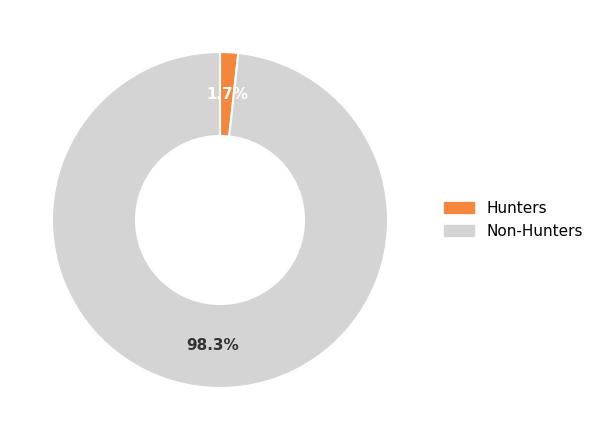
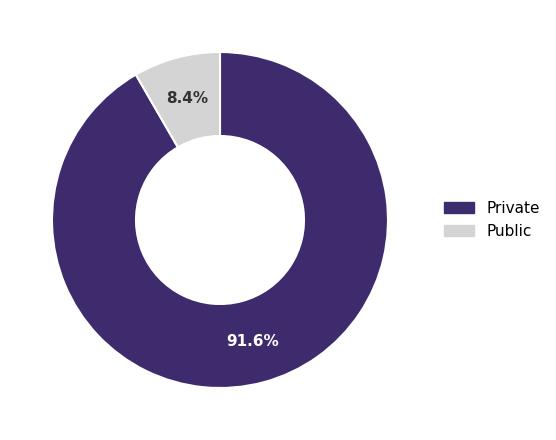
Delaware ranks 49th among all 50 states for percentage of private land.
For the most accurate information on Delaware Hunting Seasons, along with the state’s requirements for tag and bag limits, it’s a good idea to check with the Delaware DNR. We’ve provided their contact information below, along with links to helpful resources, including licensing.
89 Kings Highway
Dover, DE 19901
Why limit yourself to public land when there is private land to explore.
Delaware hunters primarily target white-tailed deer and waterfowl, with the state’s agricultural landscape and coastal position making it ideal for both pursuits. Wild turkey hunting has grown substantially as populations have expanded throughout the state. Waterfowl hunting along Delaware Bay and its tributaries is a proud tradition, with Canada geese, mallards, black ducks, and teal all commonly taken. Pheasant stocking programs provide upland hunting opportunities, and the state’s furbearers including fox and coyote attract hunters and trappers.
Delaware’s small game hunting is anchored by pheasant, with the state’s Division of Fish and Wildlife operating an active stocking program to supplement wild populations. Stocked birds are released throughout the hunting season on state wildlife areas, providing hunters with productive upland hunting opportunities. Gray squirrel and cottontail rabbit hunting in Delaware’s woodlands and brush edges rounds out the small game offerings.
Waterfowl hunting is arguably Delaware’s most celebrated hunting tradition. The state’s position along Delaware Bay and the Atlantic Flyway creates exceptional waterfowl concentrations from October through January. Canada goose hunting in particular is outstanding, with large flocks of geese using Delaware’s agricultural fields for feeding throughout the migration season. Black ducks, mallards, teal, and scaup are also frequently taken in Delaware’s tidal marshes and wetlands.
Dove hunting opens the season in September and is popular throughout the state’s agricultural areas. Delaware also offers hunting for woodcock, snipe, and rail in appropriate habitats, providing additional small game opportunities for dedicated upland hunters.
White-tailed deer hunting is the dominant big game pursuit in Delaware. The state’s flat agricultural landscape and wooded edges provide ideal habitat for deer, and populations are healthy throughout all three counties. Delaware hunters benefit from a combination of firearms, archery, and muzzleloader seasons that provide extended hunting opportunities from September through January. The state’s agricultural food sources—soybeans, corn, and wheat—produce well-nourished deer with excellent antler potential.
Wild turkey hunting has become increasingly popular in Delaware as populations have grown to sustainable levels across the state. Both spring and fall turkey seasons are available, with spring gobbler hunting being the more popular of the two. Hunters pursue Eastern wild turkeys through Delaware’s woodlots, farm fields, and wetland edges during both seasons.
Delaware does not have populations of other traditional big game species, but coyotes have become established throughout the state and are huntable year-round. The expanding coyote population has created a new hunting opportunity and hunting predators has gained a dedicated following among Delaware hunters.
Offer hunting, fishing or camping access on selected dates. You set the activities, the price and the rules.
Delaware offers great hunting opportunities across the state, both on public and private land. We’ve included some of the best areas for public hunting below and as we have access we’ll be adding more private land too.
Delaware has approximately 90,000 acres of state-owned land open to public hunting through its wildlife areas, state forests, and other managed properties. The Prime Hook National Wildlife Refuge on the Delaware Bay coast encompasses over 10,000 acres of tidal marsh, freshwater wetlands, and upland habitat that is open to waterfowl and deer hunting. The Bombay Hook National Wildlife Refuge, also on Delaware Bay, provides additional waterfowl hunting opportunities.
Delaware’s state wildlife areas are distributed throughout all three counties, providing hunting access for residents across the state. The Blackbird State Forest in northern Delaware is the largest state forest, offering deer and turkey hunting in mixed hardwood habitat. The Milford Neck Wildlife Area in central Delaware provides waterfowl and deer hunting access.
Despite its small size, Delaware makes efficient use of its public lands for hunting. The state’s wildlife areas are carefully managed to provide quality hunting experiences while supporting healthy wildlife populations for future generations.
1. Prime Hook National Wildlife Refuge
2. Bombay Hook National Wildlife Refuge
3. Blackbird State Forest
4. Augustine Wildlife Area
5. Milford Neck Wildlife Area
Since a large portion of Delaware is private land, getting access for hunting can be very appealing. When you hunt private land, it’s not only less crowded, the animals also tend to be less skittish and this means you’ll have a better day out in the field. Traditionally, accessing private land for hunting has been complicated and expensive. You either needed to join a club, hire a guide, or start knocking on doors.
Fortunately Wing It is simplifying this for hunters and outdoor enthusiasts of all types. We’re adding new land every day and if we have some in your area, you’ll see some options below.